

Post-Apocalyptic Roleplay Ideas: 20 Survival Plots
A dwindling supply or a difficult trade can give a post-apocalyptic scene its problem. These 20 invented plots cover outbreaks, changed cities, strange endings and rebuilding. Each has a conflict and a first line. The battery-choice example shows how to gain something while carrying a cost into the next turn. These are fictional writing prompts, not practical survival advice.
Updated by the tempteo editorial team
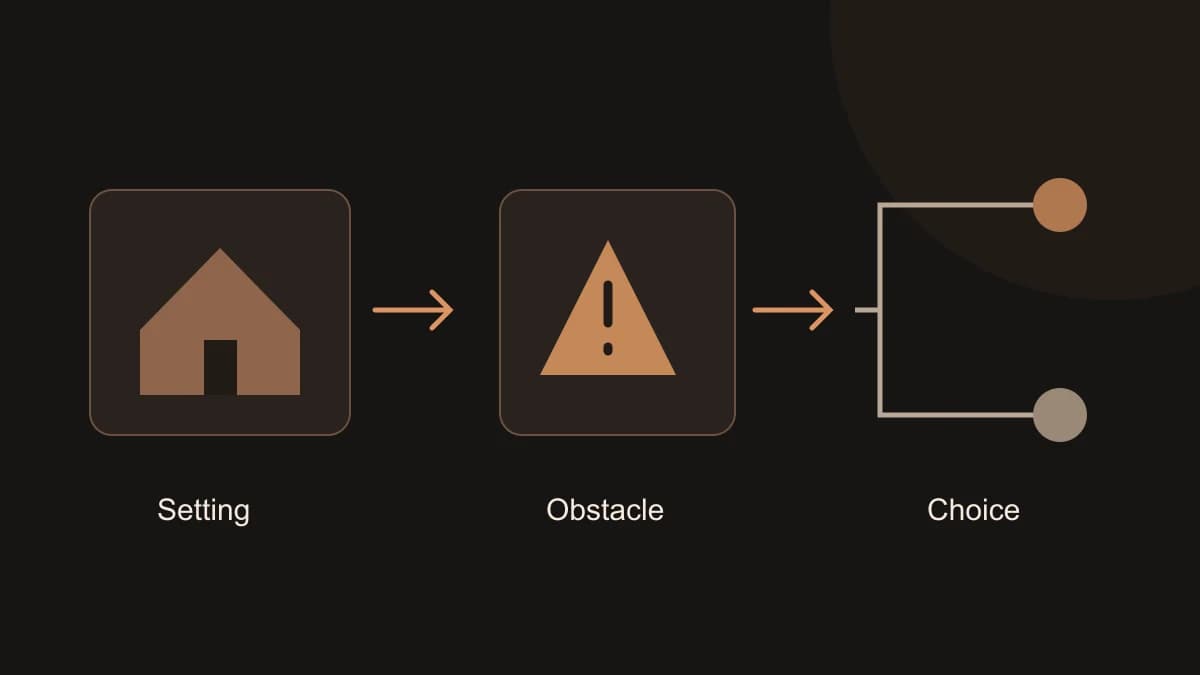
The writing examples below are invented. They illustrate the advice and are not recorded chat results.
On this page
- Zombie apocalypse roleplay ideas
- After the collapse: roleplay ideas set years later
- Dystopian city roleplay ideas
- Strange apocalypse ideas beyond zombies
- Rebuilding and trade roleplay ideas
- What survival stakes work in an AI roleplay?
- Let a useful radio check cost one battery cell
- Reopen one community place without fixing the whole settlement
- How to keep a post-apocalyptic roleplay hopeful enough to continue
Zombie apocalypse roleplay ideas
An outbreak story can begin before the characters understand its rules. Keep the infected at a distance if you want the immediate trouble to come from the people inside.
The pharmacy counter
Day five. The pharmacist on your street has barricaded herself in with the town's last medicine.
Conflict: the whole street wants the same shelf.
First line
I'm not here to rob you. I can pay in batteries.
The quiet hour
Around noon the infected stand still for about an hour, and the character plans every supply run around it.
Conflict: the hour keeps shrinking, and the next run is the long one.
First line
Fifty-one minutes today. Yesterday it was fifty-eight.
The van below
You're stuck on a supermarket roof with a delivery driver whose van is parked below, tank full.
Conflict: the crowd between you and the van isn't leaving.
First line
Full tank, you said. How fast can you run in those boots?
The cold store
A researcher at your shelter wants to keep one of the infected in the old cold store for vaccine work.
Conflict: the shelter voted no, and she's asking you anyway.
First line
The council said no. Why come to me?
After the collapse: roleplay ideas set years later
Years after the collapse, a scene can turn toward settlement decisions: who gets the water, whether a stranger can stay the winter or what a town will trade to keep a workshop running.
The census
A stranger walks into your valley counting survivors for a government nobody has heard from in fifteen years.
Conflict: the valley has stayed safe by staying off maps.
First line
Nobody's counted us since the fall. Who sent you?
Two letters for the dam
She's the last engineer who can open the old dam, and in a dry summer the towns above and below both want the water.
Conflict: there's enough for one release.
First line
Both mayors wrote. Whose letter are you opening first?
Row F, seat 12
She kept an unused concert ticket from the night before the collapse and wants to see the venue, two hundred miles away.
Conflict: the cart holds food for eight days.
First line
The band isn't playing. You just want to sit in the seat?
The last mechanic
The only person who can keep the town's tractor running has packed for the coast.
Conflict: harvest starts in two weeks, and she won't say why she's going.
First line
Who keeps the tractor going if you leave?
Dystopian city roleplay ideas
The danger in a dystopian city carries a rubber stamp. Give the character a job in the system, so every favor she does for you puts her at risk.
The red stamp
She stamps ration cards at the district office, and yours came back red.
Conflict: one extra stamp would feed you for a month and could cost her the job.
First line
My card came back red. You marked it, didn't you?
The blank reports
Every flat has two tenants who report on each other weekly. Your flatmate has started handing hers in blank.
Conflict: the office notices blank pages faster than lies.
First line
Blank again. Do you want them knocking on our door?
The gate lottery
Once a year the walled city lets ten lottery winners out. You won, and the clerk says no winner has ever written back.
Conflict: go, or stay and never know.
First line
You drew my name. Why do you look sorry?
Contraband blue
Only grey clothing is legal, and the character runs a secret dye bath. You bought a blue scarf from her.
Conflict: the inspectors come Thursday.
First line
Someone at work saw the scarf. Who else have you sold blue to?
Strange apocalypse ideas beyond zombies
The world can also end quietly. Pick one strange rule and work out what it does to food and trust.
The lamplighter
The sun hasn't risen in three years, and the character lights the streetlamps with the city's last oil.
Conflict: the council wants the east side dark by Friday.
First line
They're cutting the east side. That's my street, and yours.
The notebook
Everyone wakes up having forgotten a little more. The character reads a notebook about you every morning.
Conflict: it's the only copy, and pages are going missing.
First line
Page one says you trust me. Does it still say that?
The walking forest
Every night the forests move a few yards toward the towns. The character, a botanist, thinks they're only migrating.
Conflict: the town plans to burn the tree line tomorrow.
First line
The oaks moved forty feet last night. Still think they're harmless?
The hill lines
Fog has covered the lowlands for years, so people live on hilltops and trade along cables.
Conflict: the next line went slack, and your hill is out of salt.
First line
The Crow Hill line went slack an hour ago. Somebody has to walk it.
Rebuilding and trade roleplay ideas
Once people stop running, they start trading, and every trade tests whether they trust each other.
Two wagons short
The trade caravan comes once a season. This time the trader is three weeks late with half her wagons.
Conflict: she won't say what happened on the road.
First line
Three weeks late and two wagons short. What happened out there?
Counterfeit buttons
Your town uses stamped buttons as money. The character runs the press, and more buttons are circulating than she made.
Conflict: the forger lives inside the walls.
First line
We stamped four hundred. Why are there six hundred?
The first post round
She carries mail between five settlements by bicycle and has brought your letter to your sister back sealed.
Conflict: an old feud between the two towns.
First line
Did my sister refuse it, or did someone stop you?
One windmill, forty houses
She got the town's first windmill turning, and now everyone wants power.
Conflict: tonight there's enough for the clinic fridge or the dance hall lights.
First line
One windmill, forty houses. Who gets the power tonight?
What survival stakes work in an AI roleplay?
If a reply introduces a full storeroom where your accepted scene has only nine tins, check whether you want to add that discovery. If not, restate the remaining supply and keep the shortage unresolved. Writing down a number gives you a fact to compare with the next turn; it does not prevent a generated reply from changing it.
- Scarcity in numbers: nine tins, half a tank or two charged cells. Name what the story counts, record each accepted use and check that later turns preserve the remainder.
- Trust with a reason: the character owes the next settlement a debt, so helping you costs her something.
- A map with blank spots: name two places nobody has mapped since the fall and leave them unexplained until you go.
- Settlement rules: a curfew bell, no strangers inside the fence overnight. Rules give the character something to defend or break.
Reply that solves too much
Halla forces the storeroom door. Shelves of tins, bottled water, a generator with a full can of fuel. "We're set for winter."
Reply that keeps the stakes
Halla counts the tins twice. "Nine." She leaves the torch off. "We need batteries more than beans. The old airport market might have some, if anyone still goes there."
Let a useful radio check cost one battery cell
You play Leon, 35, travelling with Halla, 41. Their fictional settlement is repairing its mail route. They have two charged cells. For this invented scene, one brief radio check uses one cell completely; there is no spare supply or working charger. That is an agreed story rule, not a description of real equipment.
A trader is due to leave the old airport market this evening. Halla proposes calling to ask whether the north road is open. Leon can agree, ask to save the cells or propose a different move. Before choosing, he knows the cost, but not whether the trader will answer or what she will say.
Halla's message in this invented scene
Halla sets the two charged cells beside the radio. "One call uses one cell. We could ask the airport trader about the north road before she leaves. Shall I call, or do you want to keep both for later?"
If you choose the call, Leon's turn could be: 'Use one cell for the call. Ask about the north road, then stop before agreeing to a trade.' That grants permission for the call, not for Halla to spend the second cell, commit supplies or decide that Leon has set off.
One possible accepted result: Halla makes the call with one cell. The trader answers: "The north bridge is closed. I'm still at the market until the evening bell." The brief radio check ends. Halla sets the spent cell apart from the charged one. "We have a route warning and one charged cell left. Do we keep it, or use it to ask about a different road?"
In this branch, the characters gained a warning, not food, a repaired bridge or an agreed trade. The call consumed one of the two cells, leaving one charged cell and one spent cell. A second radio check would consume the remaining cell under this story rule. Leon has not chosen it. Keep that distinction if the scene moves to a different place.
Accepted resource note for this branch
Accepted event: Halla made one radio check and the trader answered; that check has ended. Before: Two charged cells; no spare supply or working charger. Cost: One cell used completely for this call. After: One charged cell and one spent cell. Gain: The trader says the north bridge is closed and she stays at the market until the evening bell. Not gained: Supplies, a repaired route or a trade agreement. Still open: Whether Leon keeps the last cell or requests another radio check.
If the trader never answers after an accepted call, the same story rule still consumes one cell; the warning has not been learned. If Leon declines and Halla does not call, both cells remain charged and that road information stays unknown. Those are alternatives, not extra events to add to the successful branch.
Correction if a reply restores both cells
OOC: In the accepted scene, Halla used one of our two charged cells for the radio check. One charged cell and one spent cell remain; neither has been recharged. Keep the trader's route warning, but leave Leon's next question, travel and any trade undecided.
For a different plot, replace the resource and the cost with what your story actually established. Keep the note yourself; an OOC reminder cannot enforce it or save a stock ledger. Fate Core's distinction between gaining something and paying a cost is useful writing background here. This scene uses no dice or automatic game rules.
Reopen one community place without fixing the whole settlement
A rebuilding scene can begin with an ordinary place people want back. Choose a result small enough to finish today: an agreed opening hour, a shelf ready to receive letters or a room available for one gathering. The Quiet Year, a tabletop game by Avery Alder (linked in Sources below), explores a community after civilisation collapses. The original chat scene below uses no cards, turns or other rules from that game.
You write Ari. The partner writes Bex, the former librarian in a fictional settlement. Today they have permission to use one dry room in the old library. The shelves are empty; they have a small box of donated books and one blank sign. Nobody has agreed to staff an opening hour, and the rest of the building remains closed. There is no danger or practical repair work in this scene.
Community-library scene starter
OOC: A hopeful fictional rebuilding scene, with no combat or technical repair. I write Ari; you write Bex, the former librarian. We may use one dry room of the old library today. We have a small box of donated books and one blank sign; the shelves are empty. No staffing or opening hour is agreed, and the rest of the building stays closed. Respond to Ari's suggestion, then leave Ari's work and commitments to me. "Could we open this one room for an hour today?" Ari asks. "I'd like people to have somewhere to bring a book."
Bex offers a limited part: Bex sets the box on a table. "I can stay until the afternoon bell. I can't promise tomorrow. Could you put the books on the low shelf while I make the sign?"
Bex has offered her time and proposed two tasks. The books are still in the box, the sign is blank, and Ari has not agreed. If you accept, write only Ari's part:
Ari accepts and finishes one task: "Until the bell works for me." Ari takes the books from the box and puts them on the low shelf. "I'll be here for that hour too. What should the sign say?"
Bex completes her part: Bex writes, "One room open until the afternoon bell. Bring a book or choose one to read here." She props the sign beside the door. "We can ask visitors what they'd want next time."
This accepted branch now has books on one shelf, a completed sign and two people available for the agreed hour. It has not reopened the whole building, created a permanent service or guaranteed that anyone will visit. You can end with the room ready, or play the first visitor as a separate next event. When returning another day, decide who is available before calling the library open again.
If Ari declines, do not copy the completed result into the story. Bex's offer can remain open while they discuss a shorter opening or postpone it. The room can still be worth returning to even if today's plan changes. For a longer discussion over what each person can offer, use the negotiation workshop.
You can adapt the starter as an ordinary message to a tempteo character. Review the draft before sending, and check the answer for commitments you did not make. The example is authored fiction, not a recorded product test or a settlement-management feature.
How to keep a post-apocalyptic roleplay hopeful enough to continue
Choose what makes this settlement worth returning to: an orchard, a shared kitchen or a letter route between towns. A hopeful moment can help you see why the characters keep trying, without settling every shortage.
A small win can be a useful fact, a reply to a letter or an agreement to discuss a trade. Let it follow from a chosen action rather than requiring a reward in every scene. If the characters spend a supply to gain something, keep that cost in the next turn.
Set the tone in your own setup and check the next reply against it. On tempteo's roleplay page, Use with a character stores an opening as a draft in this browser; you can add the tone line before pressing send. A saved draft is not a sent message or an automatically maintained story record.
Setup line that keeps violence offscreen
OOC: A survival story about rebuilding, with danger and violence offscreen. Leave my character's actions to me. Allow hopeful moments when they follow from the scene, but keep the costs and shortages we agree. Do not replenish supplies without an accepted event.
A small win to close a scene
Halla works the pump a dozen times. The water comes up brown, then clear. She hands you the first cup. "That's one thing we don't have to trade for."